
NBA 2026: how modern load management actually works across an 82-game season
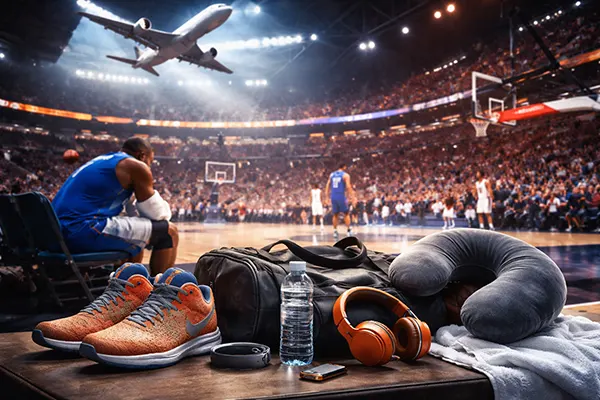
By 2026, load management in the NBA has moved far beyond the simple idea of resting star players. It now represents a structured system that balances player health, competitive integrity, league regulations and the physical realities of an 82-game schedule with constant travel. Teams are expected to keep their best players available while still managing fatigue, injury risk and long-term performance.
League policy and the reality of player availability in 2026
The NBA’s approach to player availability has become more formalised in recent seasons. Clear participation rules now limit how often teams can rest key players, especially during nationally televised games and tournament fixtures. This has forced organisations to rethink how they manage physical load without relying on frequent full-game absences.
At the same time, individual incentives have changed. Awards, legacy considerations and contract clauses tied to games played mean that availability carries direct professional consequences. As a result, players and teams share responsibility for maintaining consistent on-court presence throughout the season.
Rather than removing players from games entirely, teams now focus on reducing unnecessary strain within games. Availability is treated as a season-long resource, carefully allocated to avoid sharp declines in performance during critical periods.
From resting games to controlling stress within minutes
Modern load management focuses on how minutes are played, not just how many. Coaching staffs adjust roles to reduce physical stress, limiting repeated high-impact actions such as constant isolation drives, aggressive defensive switching or extended ball-handling under pressure.
Substitution patterns are also more precise. Instead of long, exhausting stretches, players often operate in shorter bursts designed to maintain efficiency while lowering cumulative fatigue. This helps preserve late-game effectiveness without requiring full rest days.
By 2026, the most successful teams are those that understand load as a combination of physical, cognitive and emotional stress — not simply a box score of minutes logged.
Sleep and recovery: the foundation of sustainable performance
Sleep remains the single most influential recovery factor in professional basketball. Despite advances in sports science, insufficient or poorly timed sleep continues to undermine performance, particularly during long road trips and dense scheduling periods.
NBA travel frequently disrupts circadian rhythms. Late-night games, cross-country flights and early commitments can reduce sleep quality even when total hours appear sufficient. These disruptions affect reaction time, decision-making and motor coordination — all critical at elite level.
By 2026, teams openly acknowledge that managing sleep debt is just as important as managing physical contact. Recovery plans are built around protecting consistent sleep windows whenever possible.
How teams protect sleep during travel-heavy stretches
Teams increasingly prioritise simplified routines after night games. Reduced media obligations, streamlined post-game treatment and controlled meal timing are used to help players fall asleep more quickly after travel.
Environmental consistency also matters. Players are encouraged to recreate familiar sleep conditions on the road, from room lighting to temperature and pre-sleep habits. Even small disruptions can compound over multi-city trips.
Rather than reacting to fatigue after it appears on court, teams in 2026 attempt to prevent it by treating sleep as a performance variable, not a personal preference.

Back-to-backs, travel and the limits of physical adaptation
Despite minor scheduling improvements, back-to-back games remain a core challenge of the NBA calendar. Playing on consecutive nights compresses recovery time and amplifies the effects of travel, particularly when time zones are involved.
Not all back-to-backs carry the same risk. Home-based sequences allow for more stable routines, while road-based sets often involve flights, late arrivals and reduced treatment opportunities. These differences significantly influence fatigue accumulation.
By 2026, teams recognise that fatigue from travel is not purely muscular. Neurological and circadian stress play a major role and cannot be fully addressed through traditional recovery methods alone.
Managing back-to-backs without sacrificing competitiveness
Successful teams adjust tactical demands rather than overall effort. Defensive schemes may shift to reduce constant sprinting, while offensive systems favour quicker decisions and shared creation instead of repeated isolation plays.
Minute distribution is carefully managed to avoid late-game overload. Players are less likely to experience multiple high-stress peaks within the same game, helping preserve efficiency in decisive moments.
In 2026, effective load management during back-to-backs is about intelligent redistribution of stress — maintaining competitiveness while respecting the physiological limits of elite athletes.