Alarm bells in Dallas: Cooper Flagg’s ankle sprain and the Mavericks’ next 10 games
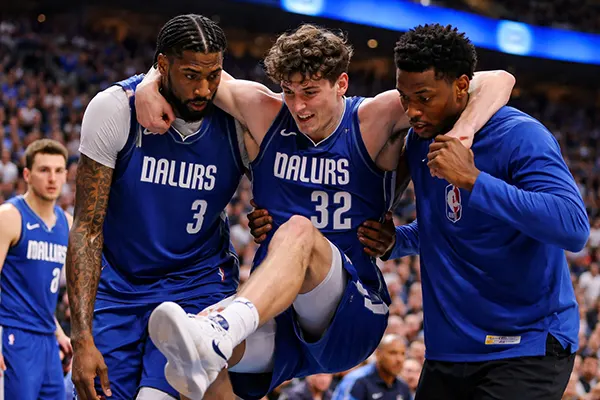
Dallas didn’t just lose a Wednesday night game to Denver — they lost control of their rotation for at least a little while. Rookie No. 1 pick Cooper Flagg left the Nuggets matchup with a left ankle sprain and didn’t return after half-time, turning a normal January stretch into a short-term problem-solving exercise. The next 10 games now matter less for aesthetics and more for damage limitation: minutes, matchups, and the basic habits that keep a season from wobbling.
What happened, and why it already affects the season
Flagg’s injury came against the Nuggets, and Dallas confirmed it as a left ankle sprain during the game. The key detail is the timing: he was ruled out for the second half, which usually signals more than a quick tape-and-go situation, even if the final imaging ends up kind. When a primary wing/forward option leaves mid-game, you don’t just lose a scorer — you lose a chunk of your defensive plan and your best connector between lineups.
This hits harder because Flagg hasn’t been a “nice extra”. He’s been a nightly workload player, starting regularly and putting up meaningful rookie production, which is why Dallas could survive other bumps earlier in the season. When a player like that is suddenly unavailable, the effects show up immediately in who brings the ball up, who guards the best perimeter threat, and how many possessions end with a clean first shot rather than a late-clock scramble.
Dallas also has to think beyond the next game. An ankle sprain is the sort of injury where the team’s choices in the first week often shape the next month: how aggressively you test it, how many minutes you ask for right away, and whether you accept a slightly worse short-term record to avoid a recurring issue later.
How Dallas should handle the first 72 hours
The sensible approach is conservative: treat the sprain as a week-to-week planning item until the medical staff has a clear grade and response-to-load data. Even if he feels better quickly, the early “looks fine” phase is where players re-roll ankles — especially wings who land in traffic, defend laterally, and sprint into transition stops.
Practically, Dallas should split his role into two parts: (1) his defensive assignments on the wing and (2) his offensive touches as a secondary creator/pressure point. Those two pieces do not have to be replaced by one player. Trying to find a single “Flagg replacement” tends to weaken both sides at once. A cleaner approach is to use one player for defence-heavy minutes and another for offence-heavy stretches, depending on opponent.
Finally, Dallas should set a minutes rule for any return game in advance. If Flagg does come back during this 10-game run, the team will look smarter if it has a firm plan (for example: no extended second-half bursts, no back-to-backs at full load) rather than improvising based on the scoreboard.
Rotation changes: who can cover the minutes and what it alters
If Flagg sits, Dallas’ wing minutes have to be redistributed, and the solution will likely come via a mix of veterans and role players rather than a single promotion. The cleanest “shape” is to keep Anthony Davis anchored as the defensive organiser inside and use sturdier perimeter options to reduce the number of straight-line drives that force emergency rotations. That keeps the rim protected without asking Davis to erase every mistake.
On offence, the priority is not to imitate Flagg’s skill set; it’s to maintain shot quality. Dallas should aim for fewer empty possessions: fewer live-ball turnovers, more early-clock actions that create a paint touch, and simpler reads for secondary ball-handlers. If the team starts hunting complex sets to “replace production”, that’s usually when the turnover rate climbs and the shot profile gets uglier.
Minutes-wise, a realistic spread is to give extra wing/guard time to players who can defend without constant help, while using bigger lineups in short bursts to win the glass. The exact names can vary by night, but the principle is steady: if you can’t replace Flagg’s two-way balance, you must replace his role in layers.
Specific role tweaks that make sense game-to-game
Dallas should consider a defence-first wing rotation in the first quarter of games — the period where teams often set their tone with pace and physicality. The goal is to keep the first six minutes stable, then open up offence-heavy lineups once the opponent’s starters begin to stagger. That reduces the “immediate hole” effect that happens when a star rookie is missing.
In closing groups, Dallas will need clarity: pick two of three priorities each night — perimeter containment, rebounding, or spacing — and accept the trade-off. Against teams with elite shooters, perimeter containment wins. Against teams that punish the glass, rebounding wins. Against switching defences that shrink the paint, spacing wins. Trying to win all three without Flagg often leads to a lineup that does none of them well.
One more adjustment: protect transition defence by sending fewer players to crash the offensive glass. It’s tempting to chase extra boards when you’re missing a key player, but it can backfire fast. A controlled retreat, even if it costs a rebound or two, can prevent the kind of run that flips a game in three minutes.
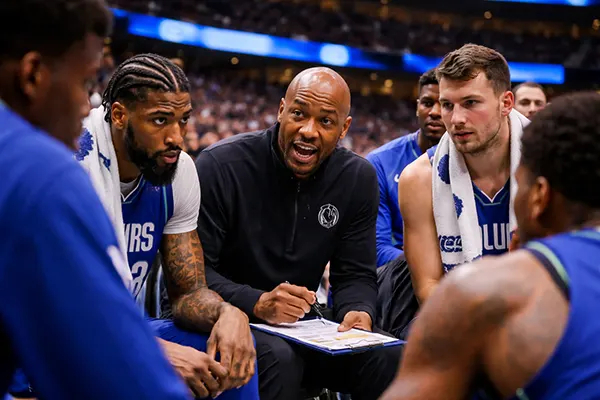
A 10-game plan: which opponents and styles hurt most without him
The next 10 games (starting immediately after Denver) are a mixed bag, but the danger zones are pretty clear: high-volume three-point offences, teams that play fast off turnovers, and opponents with multiple wings who can attack mismatches. During this stretch, Dallas sees opponents who can stress the perimeter, force quick decisions, and punish any soft closeouts.
Golden State and the Lakers represent different problems: the Warriors test communication and off-ball discipline, while the Lakers can turn any sloppy possession into a transition sprint. Boston is the one that tends to expose structural issues — they pressure your weak links, then turn your mistakes into threes. Those are the matchups where missing a two-way wing is felt most sharply, because you lose a defender and a stabiliser on the other end.
Meanwhile, games like Houston or Minnesota can become physical, possession-by-possession battles. Without Flagg’s versatility, Dallas may need to win those with structure: fewer giveaways, controlled pace, and a deliberate approach to defensive rebounding.
How to approach the slate: three practical priorities
Priority one is shot selection. Dallas should chase paint touches early in possessions — not as a slogan, but as a rule. A good mid-range look after a paint touch is usually better than a rushed three with no advantage created. This also helps defensive balance because fewer long rebounds and fewer sprint-back situations occur when the offence is organised.
Priority two is defensive rebounding. When key wings are out, teams often give up second-chance points because box-outs get messy on rotations. Dallas should treat every opponent miss as a five-man job: guards pinch in, wings hit bodies, and the bigs secure. If the team loses the glass while also turning it over, it won’t matter how well the half-court defence looks on paper.
Priority three is turnover control, especially live-ball turnovers at the top. Those are basically free points for opponents. If Dallas can keep its giveaways down, it gives itself a chance to win “ugly” games during the stretch where the rotation is under pressure.