First 15-Minute Goal Betting: Calculating Risk Instead of Chasing “Streaks”

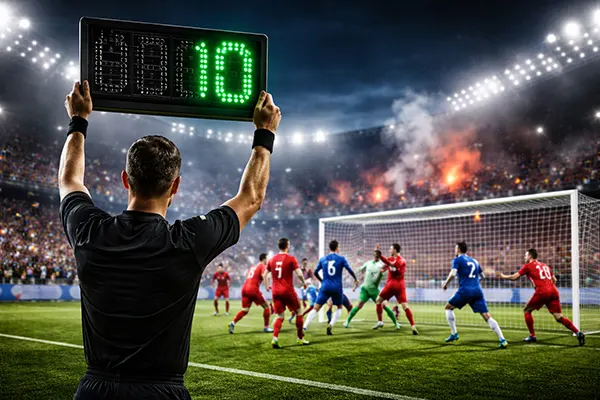
Markets on a goal in the opening 15 minutes attract attention because they promise a quick result. Within a quarter of an hour, the bet is either settled or lost. Yet speed does not equal simplicity. In 2026, with detailed event data available for nearly every professional league, there is no reason to rely on talk of “hot runs” or “inevitable early goals”. This market rewards those who understand probability, tempo, and price efficiency. If you treat it as a statistical problem rather than a story about momentum, you gain a measurable edge over bettors who follow narratives.
Why “Early Goal Streaks” Mislead Even Experienced Bettors
The idea of a team being “due” an early goal usually stems from a small sample. Five matches with goals inside 15 minutes may look convincing, but in statistical terms this is fragile evidence. Football scoring is a low-frequency event, and short-term clustering happens naturally even when underlying probabilities stay the same.
Modern data from Opta and StatsBomb shows that across Europe’s top five leagues between 2022 and 2025, roughly 22–26% of matches featured a goal in the first 15 minutes. Seasonal variance of a few percentage points is normal. When a specific team shows 40% over ten matches, it often regresses towards the league mean over the next stretch.
The gambler’s fallacy plays a central role here. After several early goals, bettors assume continuation; after several slow starts, they expect an imminent correction. In reality, each match is influenced by tactical context, line-ups and game state expectations, not by what happened two weeks ago.
Sample Size, Variance and Regression to the Mean
To evaluate this market properly, you need a meaningful dataset. As a rule of thumb, anything below 20–25 matches tells you little about a team’s true early-goal probability. Even 38 league matches represent just one season and can be skewed by managerial changes or fixture difficulty.
Variance explains why extreme runs occur. If the base probability of an early goal is 24%, you will still observe sequences of four or five matches in a row with such goals. That does not mean the true probability suddenly jumped to 60%.
Regression to the mean is not a theory but a statistical property. When a team overperforms in early scoring frequency relative to its expected goals profile, numbers typically stabilise over time. Ignoring this leads to inflated confidence and poor price assessment.
Building a Realistic Probability Model for the First 15 Minutes
A rational approach starts with estimating the base rate. Look at league-wide data for the past two to three seasons to determine the average frequency of goals in the first quarter-hour. In 2026, most major leagues remain within the 23–27% range, with slight differences due to tactical styles.
Next, adjust for team-specific attacking intensity. Early xG (expected goals) per 15 minutes, pressing height, and tempo metrics provide stronger signals than raw goal counts. Teams with aggressive high presses and fast transitions often create higher early xG, which can justify a probability above the league mean.
Finally, factor in contextual variables: derby matches, knockout ties, weather conditions, and squad rotation. A Champions League second leg with an aggregate deficit increases early attacking urgency. A midweek match after heavy rotation may suppress tempo.
Translating Probability into Fair Odds
Once you estimate probability, convert it into decimal odds by dividing 1 by the probability. If your model suggests a 30% chance of an early goal, fair odds equal 3.33. Any bookmaker price above that threshold represents theoretical value; anything below it does not.
Margins must be considered. Bookmakers typically price this market with an overround of 5–8%, sometimes higher in lower leagues. That means the implied probabilities from displayed odds already exceed 100% when combined.
Comparing your calculated fair line with multiple operators helps identify discrepancies. In efficient top-tier competitions, large gaps are rare. In secondary leagues or women’s competitions, mispricing occurs more often due to thinner liquidity and less refined models.

Risk Management and Bankroll Strategy in Fast-Settling Markets
The appeal of a quick outcome can encourage overexposure. Because results are known within 15 minutes, bettors may place multiple consecutive wagers in a single evening. This accelerates variance and increases emotional pressure.
Bankroll allocation should follow a fixed-percentage model. Many disciplined bettors use 1–3% of total capital per wager in medium-variance football markets. Given the relatively low base probability of early goals, staying near the lower end of that range is prudent.
It is also essential to separate model-based decisions from emotional reactions. A losing streak of five bets in this market is statistically plausible even with a positive expected value. Without strict staking rules, short-term swings can erase long-term advantage.
When to Avoid the First 15-Minute Goal Market
Low-information matches are dangerous. If team news is uncertain, tactical intentions unclear, or reliable early xG data unavailable, your probability estimate becomes guesswork. In such cases, the apparent simplicity of the market hides elevated risk.
Be cautious with extreme weather, artificial pitches, or leagues with inconsistent data reporting. These factors distort tempo and chance creation patterns in ways that are hard to quantify accurately.
Finally, avoid betting purely because of televised exposure or social media narratives about “fast starters”. Unless your calculated probability exceeds the implied market probability by a measurable margin, discipline requires passing the opportunity.