
Rafael Nadal’s Road to Recovery: Can He Finish the 2025 Season Strong?
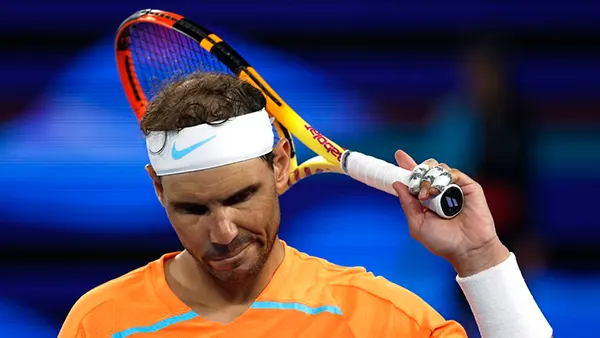
Rafael Nadal’s return to the ATP Tour in 2025 has become one of the most closely watched stories in professional tennis. After facing a series of muscle and hip injuries, along with the ongoing effects of the psoas tendon tear that sidelined him for most of 2023, Nadal has entered the new season with cautious optimism. His preparation, training adjustments and results from the first months of 2025 have raised an essential question: does he have the physical stability and match rhythm to complete the season at a high level?
Physical Rehabilitation and Adjusted Training Strategy
Nadal’s medical team at the Rafael Nadal Academy and his long-standing physiotherapy staff in Barcelona have concentrated on a more measured workload throughout 2024 and into early 2025. The focus has shifted from high-volume sessions to targeted strengthening of the lower kinetic chain. This approach aims to reduce the strain on the hip and abdominal areas that have caused repeated setbacks.
In April 2025, Nadal spoke openly about adapting to age-related physical limitations. His training blocks have incorporated more controlled court movement drills rather than the explosive baseline exchanges that defined his earlier career. According to his team, these modifications have improved stability and reduced inflammation after practice sessions.
Another significant factor has been Nadal’s altered schedule. Instead of playing consecutive tournaments, he has selected events with recovery windows in mind. This calculated calendar management aims to prevent the overload cycles that contributed to his 2022–2024 injury periods.
Medical Monitoring and Long-Term Health Considerations
The effectiveness of Nadal’s recovery programme relies heavily on continuous medical tracking. His team uses regular MRI scans, motion analysis and biochemical markers to evaluate tissue stress. These assessments have shown gradual improvement, particularly in muscular endurance around the hip joint, which has historically been a problem area.
Despite this progress, specialists close to the player emphasise that the risk of re-injury remains. Nadal’s style, even in a modified form, requires abrupt directional changes and extended rallies, which place natural pressure on previously injured tissue. For this reason, the medical team has introduced real-time monitoring during training to detect early signs of overload.
This medical oversight has enabled Nadal to enter tournaments in 2025 with fewer doubts than in the previous two seasons. However, his team remains conservative, knowing that his ability to complete the season depends not only on physical improvement but also on avoiding sudden, acute setbacks.
Competitive Form and Early-Season Performance
Nadal’s early results in 2025 have demonstrated promise without overstated expectations. At smaller ATP 250 events in February and March, he managed to produce several matches with clear tactical consistency, relying on controlled aggression rather than heavy baseline grinding. His serve speeds have slightly decreased compared with his peak, yet his placement has become more precise, allowing him to shorten points.
Analysts noted an improved willingness to use the forehand down-the-line and targeted net approaches, tactics designed to limit long exchanges that could strain his lower body. While this adaptation shows strategic maturity, Nadal still faces opponents who exploit his reduced mobility on the stretch.
These early tournaments have also revealed the area where Nadal needs the greatest improvement: match endurance. Although he maintains a high level for sustained periods, fatigue becomes more visible in deciding sets. His coaching staff is aware that this component must progress steadily to meet the demands of mid-season events.
Psychological Readiness and Competitive Confidence
Nadal’s mental resilience remains unchanged. Throughout interviews in 2025, he has shown the same grounded approach that defined his career. Rather than focusing on rankings, he has emphasised the importance of daily progression and realistic targets. This mindset reduces external pressure and allows him to compete with clarity.
Confidence, however, remains tied to physical feedback. In matches where his movement feels controlled and pain-free, his tactical decisions flow naturally. When minor discomfort appears, his game becomes more conservative, which limits his ability to create offensive pressure.
Psychologists familiar with high-performance athletes suggest that Nadal’s return requires a balance between ambition and acceptance. The question is not about returning to his prime level, but about building enough trust in his body to perform consistently against top-20 opponents throughout the season.
Prospects for the Rest of the 2025 Season
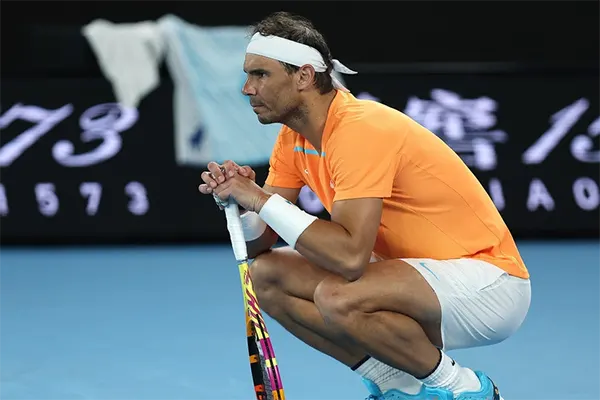
Nadal’s prospects for completing the 2025 season strongly depend on several factors: his recovery maintenance, his ability to manage match load, and his calendar choices leading to the US hard-court swing and the indoor season. If he maintains his current training rhythm without major interruptions, he could remain competitive at selected ATP 500 events and potentially make deep runs at tournaments with slower surfaces.
The clay season remains his most favourable period. While he has indicated that his priority is sustainability over aggressive scheduling, he is expected to participate in at least two major clay tournaments. His performance on clay will be one of the clearest indicators of whether he can still deliver high-level tennis consistently.
Looking ahead, Nadal and his team are fully aware that longevity requires careful planning. Rather than pursuing a full-season grind, his strategy appears centred on peak performance in targeted periods. If this approach continues to prove effective, there is a realistic possibility of seeing Nadal complete the 2025 season with stability, competitive spirit and a performance level that reflects his experience and adaptability.
What Determines His Season’s Outcome?
The key determinant will be the absence of significant setbacks. Even a minor re-injury could shift his entire season’s trajectory. For now, his body shows promising signs of tolerance to controlled workload, but the test of multi-week tournaments remains ahead.
Another factor is his ability to sustain tactical adjustments. Nadal has demonstrated readiness to evolve his style, yet maintaining this approach under pressure is essential. If he manages to combine tactical discipline with physical stability, he will remain a threat across diverse surfaces.
Finally, the emotional impact of each result will shape his motivation. Nadal remains deeply connected to competition, and confidence gained from successful matches may fuel further progress. The 2025 season might not define his career, but it could showcase the resilience and discipline that have always characterised his journey.