NBA Playoffs 2026: The Season Storylines With the Greatest News Potential
The 2026 NBA playoffs arrive with a rare combination of established superstars, emerging contenders, and several teams attempting to reshape their identity. Across the regular season, a number of narratives gradually formed and now move into the decisive stage where every possession carries greater meaning. From title defences to long-awaited breakthroughs and tactical shifts across the league, the playoffs offer a stage where months of strategic planning are tested under pressure. For analysts and fans alike, several developments stand out as having the strongest news value and the potential to shape discussions throughout the postseason.
The Race for a New Championship Dynasty
One of the most discussed themes entering the 2026 postseason concerns whether the league is moving towards another era dominated by a single franchise. Over the past decade the NBA has alternated between periods of dominance and seasons defined by competitive balance. In 2026, several teams appear capable of establishing a longer run of success if they convert their regular-season performance into playoff victories.
The Denver Nuggets remain central to this discussion. With Nikola Jokić still performing at an elite level and the roster maintaining strong chemistry, Denver continues to represent a model of continuity in a league where roster changes often disrupt momentum. Their offence still revolves around intelligent ball movement and efficient inside scoring, making them a difficult opponent during a seven-game series.
At the same time, the Boston Celtics have assembled a squad that many analysts consider the most balanced in the Eastern Conference. With Jayson Tatum and Jaylen Brown reaching the peak years of their careers and a defensive system capable of limiting perimeter scoring, Boston’s playoff journey is closely watched as a potential starting point for sustained championship contention.
How Superstars Shape the Championship Conversation
The presence of elite players remains the single most decisive factor in the playoffs. Nikola Jokić, Giannis Antetokounmpo and Luka Dončić continue to influence the strategic landscape of the league, forcing opponents to redesign defensive schemes. Each of them combines scoring ability with playmaking, which increases their impact beyond individual statistics.
In recent seasons the NBA has also seen a shift toward multi-functional forwards who can defend multiple positions while maintaining scoring efficiency. Players such as Tatum and Giannis represent this development and highlight how teams now build rosters around versatility rather than traditional positional roles.
The 2026 playoffs therefore represent not only a competition between teams but also a contest between different interpretations of modern basketball leadership. Whether the next dynasty forms around an established star or a younger emerging leader remains one of the most compelling questions of the postseason.
The Emergence of the Next Generation
Another storyline with strong news potential revolves around the league’s younger stars. Over the last three seasons several players drafted after 2019 have rapidly evolved into franchise leaders. Their performance during the 2026 playoffs may determine which of them becomes the defining face of the league during the second half of the decade.
Anthony Edwards of the Minnesota Timberwolves has already demonstrated his ability to carry offensive responsibility during high-pressure moments. His scoring versatility, combined with improved defensive discipline, positions Minnesota as a team capable of surprising more experienced opponents.
Similarly, Victor Wembanyama’s development with the San Antonio Spurs has attracted global attention. His unique combination of height, mobility and shot-blocking allows San Antonio to experiment with defensive structures rarely seen in the modern NBA. If the Spurs manage a deep playoff run, it would significantly alter expectations surrounding the franchise’s rebuilding timeline.
How Youth Changes Playoff Strategy
Younger teams often introduce a faster pace and more aggressive transition offence during the playoffs. Coaches increasingly rely on quick ball movement and early shot-clock opportunities to exploit defensive mismatches before opponents establish half-court coverage.
However, playoff basketball also demands emotional control and situational awareness. Teams led by emerging players must demonstrate that they can adapt when defensive intensity increases and referees allow more physical contact than during the regular season.
The 2026 playoffs therefore function as a test of maturity for the league’s rising generation. Their ability to manage close games, adjust to tactical changes and maintain consistency across multiple series will determine whether they move from promising talents to recognised leaders.
Strategic Evolution and Coaching Battles
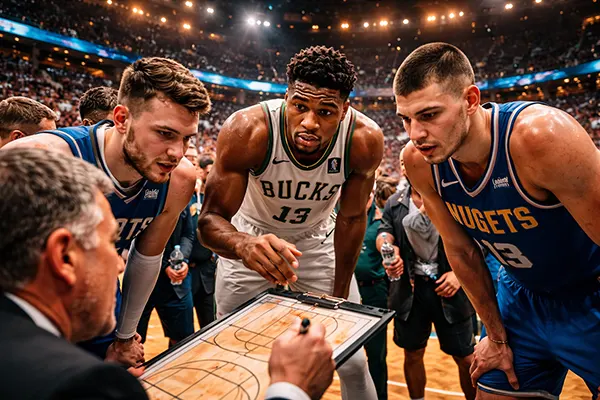
Coaching decisions frequently determine the outcome of playoff series, and 2026 brings several intriguing tactical confrontations. Teams now rely heavily on advanced data analysis to identify defensive weaknesses, while adjustments between games have become more sophisticated than ever.
One clear trend involves the growing use of positionless line-ups. Coaches increasingly deploy players capable of switching defensively across multiple positions, which reduces the effectiveness of traditional pick-and-roll plays. This approach places greater emphasis on off-ball movement and perimeter shooting.
Another development concerns load management and minute distribution. During the regular season teams often protect star players from excessive fatigue, but the playoffs require a different rhythm. Balancing rest with the need for extended playing time becomes one of the most delicate decisions for coaching staffs.
Analytics and the Modern Playoff Playbook
Statistical modelling now influences nearly every strategic decision in the NBA. Coaches evaluate shot selection, defensive match-ups and substitution timing through detailed performance data gathered throughout the season.
Three-point efficiency continues to shape offensive planning. Teams that combine high-percentage perimeter shooting with strong defensive rebounding gain a measurable advantage during playoff series, where possessions become more valuable and scoring opportunities decrease.
The strategic dimension of the 2026 playoffs therefore extends far beyond individual performances. Tactical creativity, data-driven preparation and the ability to adapt between games will determine which coaching staff ultimately guides its team toward the championship.