
How Court Surface Affects Bets on Aces, Break Points and Match Duration
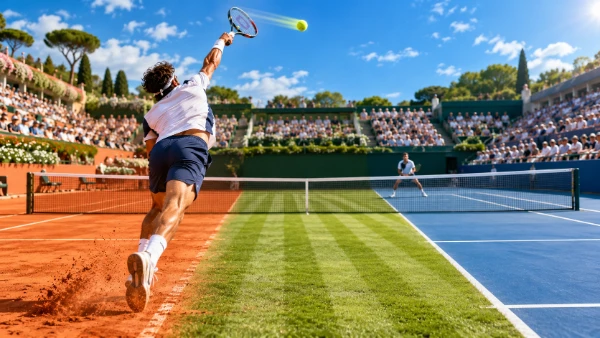
Court surface changes far more than the look of a tennis match. It affects how quickly the ball travels after the bounce, how high it rises, how much time a returner has to react and how easily a server can protect service games. Those differences matter when assessing ace totals, break-point markets and expected match duration. Clay, grass and hard courts each create recognisable patterns, but the useful approach in 2026 is not to treat those labels as automatic rules. The International Tennis Federation classifies courts by measured pace, and two events using the same broad surface can still play differently. A good betting assessment therefore starts with the surface, then adds the tournament’s actual court speed, the players’ serve and return profiles, the match format and current conditions.
Why Court Surface Changes the Shape of a Tennis Match
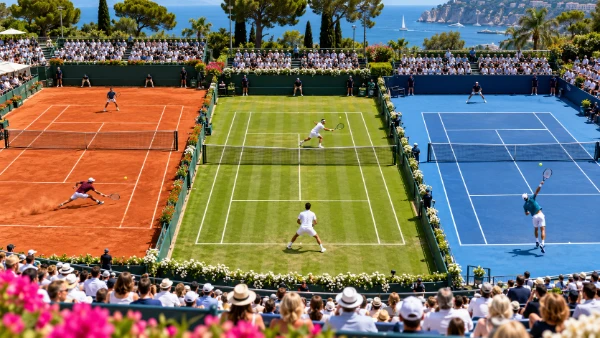
The simplest way to understand surface influence is to think about the time available after the ball lands. Clay usually takes more pace out of the shot and produces a higher bounce, giving returners and baseline players more time to defend. Natural grass generally produces a quicker, lower bounce and rewards a strong first strike, especially when the serve is accurate. Most acrylic hard courts sit somewhere between those extremes, although individual hard-court events can be noticeably slower or faster. The ITF’s 2026 technical guidance reflects this variation: courts are classified from slow to fast according to Court Pace Rating rather than by material name alone. This is why a bettor should not assume that every hard court, every clay court or every grass court behaves identically.
Match data supports the broader link between surface and point structure. A PLOS One study of men’s Grand Slam tennis from the 2021 season found that aces represented 6% of the analysed points on clay and 11.2% on hard courts, while short rallies were more common on faster surfaces. The same research showed that most points on all three surfaces were still relatively short, so the popular image of every clay-court exchange turning into a long baseline battle is exaggerated. Surface changes the probability of certain patterns; it does not determine every rally. For betting purposes, that distinction is important because markets are priced around averages, while an individual match can move well away from the average when player styles clash.
The effect of surface is also filtered through the specific event. Ball type, court maintenance, temperature, humidity, altitude, indoor or outdoor conditions and the amount of wear on the court can all change how quickly a match feels. A dry day can make some courts play quicker than a damp one, while altitude can help the ball travel faster through the air. Grass can also change across a tournament as the baseline area becomes worn. These factors do not erase the basic characteristics of a surface, but they explain why recent tournament-specific data is more useful than a broad label such as “hard court”. When assessing a line, the most relevant question is not simply which surface is being used, but how that surface has actually played at this event.
How to Build a Surface Baseline Before Reading the Odds
A practical starting point is to separate a player’s overall statistics from results on the current surface. Ace rate, first-serve points won, service games held, return points won and return games won can all move significantly from one part of the season to another. Raw totals are less helpful because they are strongly affected by match length. A player who records 18 aces in a five-set match has not necessarily served more effectively than someone who records 12 in a short best-of-three contest. Rates per service point or per service game give a cleaner picture, especially when comparing players who have played different numbers of matches or different formats.
The opponent must then be added to the calculation. A strong server facing an elite returner may finish below a usual ace average because more first serves come back into play. The same server can exceed that average against an opponent who stands far behind the baseline, struggles to read the delivery or returns poorly on the relevant side. Break-point expectations work in the same two-sided way. It is not enough to know how often a player is broken; the opponent’s ability to create pressure on return matters just as much. This is one reason surface-only systems tend to fail: they describe the environment, but not the interaction between the two players using it.
Recent research reinforces that approach. A 2026 study analysing men’s singles data from the 2025 Australian Open, Roland Garros and Wimbledon found that first-serve points won and return points won were important indicators across the different surfaces. Break-point conversion was particularly relevant in the French Open sample, while return performance also carried strong value at the Australian Open and Wimbledon. That does not mean one statistic should decide a wager. It means surface-specific betting becomes more reliable when serve and return numbers are treated as the main evidence and the surface is used to explain why those numbers may rise or fall in the current match-up.
Aces and Break Points: Where Surface Has the Strongest Effect
Ace markets are usually the easiest place to see surface influence because the returner has almost no time to compensate once the serve gets through cleanly. Faster and lower-bouncing conditions tend to increase the value of pace and placement, while slower clay gives the receiver a little more time to make contact. Even here, the relationship is not perfectly linear. The 2021 Grand Slam analysis cited above recorded its highest ace share on hard court rather than grass, showing that tournament conditions and the player sample can matter as much as the traditional slow-versus-fast ranking. The sensible use of surface is therefore to adjust an ace expectation, not to assume that grass automatically means over and clay automatically means under.
For an ace total, the most useful inputs are the server’s surface-specific ace rate, first-serve percentage and number of expected service points, combined with the opponent’s ace rate allowed. The number of service games is especially important. A powerful server can have an excellent ace rate but still fall below a high total if the match ends quickly, while a more modest server can go over a lower line simply because four or five long sets create many serving opportunities. This is why match handicap and total-games expectations often connect directly to ace markets. Before taking an ace over, it is worth asking not only whether the player can hit aces on the surface, but also whether the match is likely to last long enough to generate the required volume.
Serve style also changes how much the court helps. A player who relies on a flat, direct first serve can benefit strongly when the ball stays low and carries through the court, whereas a server who uses heavier spin may gain more from a higher bounce. Left-handed serving patterns can create different return problems, especially against opponents with weaker movement or a vulnerable backhand return. First-serve percentage matters because an ace line can become difficult to reach if too many points begin with a second serve. None of these factors requires complex modelling: the key is to avoid treating “fast court” as a complete explanation when the player’s own serve profile may be a better predictor of the final number.
Break-Point Markets Need More Than a Clay-versus-Grass Rule
Break points are influenced by surface, but the relationship is less direct than with aces. Slower conditions usually give returners more opportunity to put the serve back into play and extend the rally, which can increase pressure on service games. Faster courts can protect the server by shortening points and producing more unreturned serves. Historical match analysis has found higher break-point success on clay than on grass in some men’s samples, which fits that general pattern. However, a break point is not created by surface alone. It is the result of several earlier points in the game, and the player still has to convert the opportunity once it appears.
A study published in 2026 examined 1,475 break points from 80 professional men’s matches across the four Grand Slams. It found clear differences in how servers and receivers tended to win these pressure points, but no statistically significant surface difference in the distribution of the final point-ending outcomes. Servers more often survived through aces, winners or forced errors, while receiver success was more often linked to an opponent’s unforced error. For betting analysis, the useful lesson is that the court can influence how frequently pressure develops, yet the decisive break-point moment remains highly dependent on serve quality, return quality and execution under pressure.
It also helps to separate break points created from breaks of serve converted. A player can generate ten break points and take only two of them, while another may convert two chances from three. Markets on total breaks, player breaks or set betting are therefore affected by both opportunity and conversion. Surface-specific return games won, break points created per return game, break-point conversion and the opponent’s break-point save rate provide a fuller view. Tiebreak frequency is another useful clue: two strong servers who rarely face break points can produce a long set with no breaks at all, even though the set contains many points and lasts longer than a routine 6-2 scoreline.
Match Duration: Why Slower Does Not Always Mean Longer
Clay is associated with longer rallies, and grass with shorter ones, because the bounce and court speed alter how easily a point can be finished. Research on elite tennis has repeatedly found longer rally durations on slow clay and shorter rallies on grass. That relationship is useful when estimating match time, but it is only one part of the calculation. Tennis has no fixed match clock. A contest continues until the required sets are completed, so scoreline matters enormously. A one-sided clay match can finish quickly, while a grass match containing several close sets, repeated deuces and tiebreaks can run much longer even if the average rally is short.
Match format is the next major variable. Men’s singles at the Grand Slams are played as best of five sets, while most tour matches and women’s singles are best of three. That difference changes the possible range of match duration before surface is considered at all. A best-of-five meeting between evenly matched players has far more scope to exceed a time line than a best-of-three match between opponents with a large gap in level. When comparing historical duration figures, the sample should therefore match the current competition as closely as possible. Mixing Grand Slam men’s data with ordinary tour events can create a misleading average because the number of sets available is different.
Game structure is often more predictive than rally length by itself. Frequent holds can produce tiebreaks, and tiebreak sets contain at least twelve ordinary games before the breaker begins. Repeated deuce games can also add substantial time without changing the score quickly. On clay, more returns in play may lengthen individual points and create additional break chances, but a high number of breaks can sometimes shorten a set if one player pulls away. On a faster court, points may be brief but the score can stay close for a long time because neither player can break serve. This is why “slow surface equals long match” is too crude for a serious duration assessment.
A Practical Method for Assessing Aces, Break Points and Match Time
The strongest pre-match assessment combines three layers. First comes the tournament environment: surface, recent court pace and conditions at the venue. Second comes each player’s current serve and return record on that surface, with emphasis on rates rather than raw totals. Third comes the expected score pattern. If both players hold serve frequently, ace opportunities and tiebreak probability can rise together. If one player has a clear return advantage, the match may contain more breaks but fewer total games. Reading these markets together is often more informative than treating aces, breaks and duration as completely separate questions.
Market prices should then be compared with the match-up rather than with a general surface stereotype. A high ace line for a famous server may already include the benefit of a quick court, leaving little value if the opponent is an excellent returner. A low break total on grass may still be vulnerable when one player has weak second-serve numbers and the other attacks second serves aggressively. A high match-duration line on clay may be difficult to reach if one player is heavily favoured and regularly wins return games. The useful question is always what has already been priced into the line and which part of the match-up the market may be underestimating.
Surface should therefore be treated as context, not as a betting signal on its own. The evidence available in 2026 supports clear differences in court pace, serve effectiveness and rally structure, but it also shows that player interaction remains central, especially on break points. Small samples can distort surface statistics, and recent injuries, fatigue, a rapid switch between clay and grass, weather changes or unusual local conditions can make older averages less relevant. A disciplined assessment uses the court to set an initial expectation, then checks that expectation against current player data and the likely score pattern before any decision is made.